

Whiplash After a Car Accident in Andover
Listen to the quick answer
Whiplash-type neck symptoms after a collision can be confusing, delayed, and disruptive, and an auto accident chiropractor in Andover, MN may help evaluate and manage those symptoms as part of a broader recovery plan.
Audio will continue automatically.
Audio summary
Whiplash-type neck symptoms after a collision can be confusing, delayed, and disruptive, and an auto accident chiropractor in Andover, MN may help evaluate and manage those symptoms as part of a broader recovery plan.
What Whiplash-Type Neck Symptoms Can Feel Like After a Collision
After a car accident, neck discomfort is not always a simple “sore neck”—whiplash-type symptoms can include stiffness, aching, sharp pain with movement, and a feeling that the head and neck are not moving as smoothly as they did before the crash.
Some people notice pain right away, while others feel mostly shaken at the scene and only begin to notice neck stiffness or tightness later that day or over the next few mornings.
Whiplash-type strain happens when the head is quickly forced forward and backward, or side to side, faster than the neck muscles and ligaments can safely control, which may stretch or irritate the soft tissues around the spine.
In addition to neck pain, people sometimes report headaches, upper back or shoulder soreness, or a heavy, tired feeling in the muscles that support the head.
Because whiplash symptoms can vary, two family members in the same vehicle may feel very different after the collision, with one feeling mostly neck stiffness and the other noticing more headaches or upper back tension.
Why Neck Symptoms After a Crash May Be Delayed or Change Over Time
It can be unsettling to feel fine at the scene of the collision and then wake up the next day with a stiff, painful neck, but delayed whiplash-type symptoms are common and can be influenced by the body’s natural stress response.
Right after a crash, adrenaline and other stress hormones may temporarily mask discomfort, and swelling or muscle guarding can take hours to fully develop.
As the body begins to calm down, you may notice that turning your head to shoulder-check while driving to Bunker Hills Regional Park or backing out of a driveway brings on new soreness or tightness.
Sleep position, work demands, and everyday tasks—such as looking down at a phone, lifting kids at the Andover YMCA Community Center, or carrying groceries—can also reveal or aggravate neck symptoms that were not obvious at first.
Over days or weeks, some symptoms improve while others shift; you might feel less sharp pain but more fatigue in the muscles of the neck, or headaches may show up even as the initial soreness begins to settle.
This changing pattern is one reason careful evaluation matters, rather than assuming that early mild symptoms cannot evolve or that a quiet first day means the neck was not affected.
Common Whiplash-Related Symptoms Auto Accident Patients Describe
Local patients who have been through a collision often describe a cluster of whiplash-type neck symptoms rather than just one isolated complaint.
These may include difficulty turning the head fully to check blind spots, a feeling that the neck “catches” at the end of motion, or soreness after time at the computer.
Headaches that start at the base of the skull and move toward the forehead can show up, especially later in the day or after concentrating, which is one reason some people look for a headache chiropractor when their neck has also been strained in an accident.
Some patients report mid-back or shoulder tightness from bracing against the steering wheel or seat belt, and this tension can connect with the way the neck was jolted.
In more complex cases, sciatica or lower back pain may appear alongside neck symptoms if the whole spine experienced a sudden force, especially during larger collisions or when the body was rotated at impact.
Even milder accidents while heading to places like Bunker Beach Water Park or Bunker Hills Golf Club can lead to these kinds of symptoms, depending on speed, vehicle size, and how the body was positioned at the moment of impact.
How an Auto Accident Chiropractor Looks at Whiplash-Type Neck Issues
When you visit Heil Chiropractic after a collision, the goal is not just to “treat the neck” but to understand how the entire spine and supporting muscles may have been affected by the whiplash-type motion.
The visit typically begins with a detailed conversation about the crash: seat position, direction of impact, whether you were stopped or moving, and immediate symptoms you noticed at the scene.
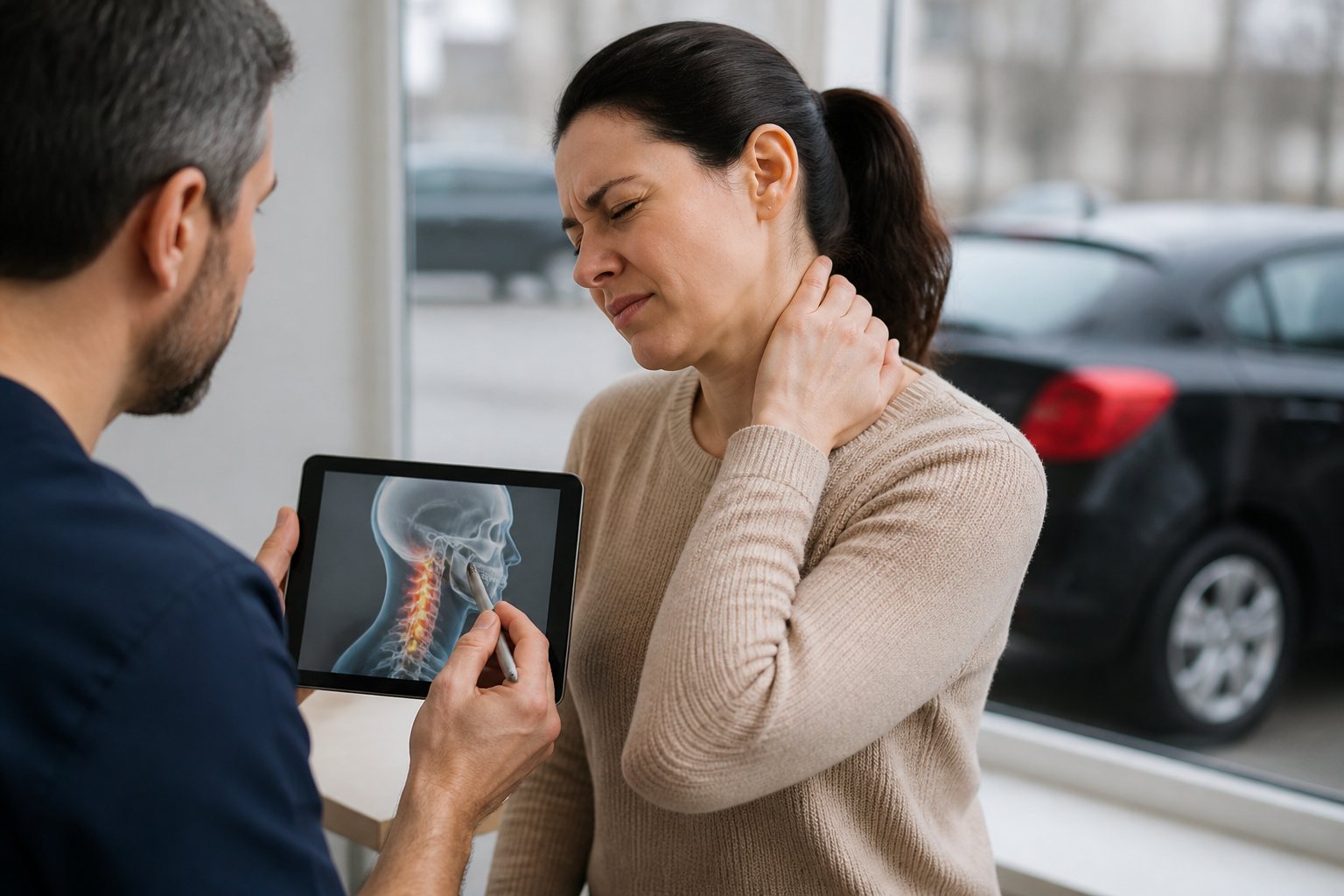
A gentle examination may include checking how far you can comfortably move your neck in different directions, feeling for muscle tenderness or spasm, and observing posture and alignment.
Depending on your history, an auto accident chiropractor may also check related areas such as the mid-back, shoulders, and lower back, since strain can travel along the spine instead of staying in one spot.
If there are red-flag signs—such as severe weakness, changes in sensation, or symptoms that suggest concussion or more serious injury—medical imaging or referral to another provider may be recommended before chiropractic care continues.
This careful, step-by-step approach helps determine whether chiropractic care may be appropriate for your whiplash-type neck symptoms and what kind of plan may best support recovery.
Neck, Headache, and Sciatica Symptoms Connected to Auto Injuries
Whiplash-type neck symptoms rarely exist in isolation after a collision, and it is common for people to experience related headaches or even sciatica that begins in the lower back and travels into a leg.
When the head and neck are whipped forward and back, the forces may also travel through the rest of the spine, which can irritate joints, discs, or nerves in the lower back.
This is one way auto injuries may contribute to sciatica, and why someone focused on neck discomfort might also notice leg pain when walking along the Rum River or navigating paths at Coon Rapids Dam Regional Park.
Headaches can arise from irritated neck joints or tight muscles at the base of the skull, and these may feel worse after concentration, long drives, or time spent at work.
A headache chiropractor with experience in auto injuries can consider how the neck, upper back, and head position are working together, rather than treating headaches as a completely separate issue.
Because each person’s spine and daily routine are different, two people with similar collisions may have very different patterns of neck pain, headaches, and sciatica, which makes individualized evaluation important.
What Chiropractic Care for Whiplash-Type Neck Symptoms May Include
For many people, chiropractic care after an auto accident focuses on gradually improving comfort, mobility, and everyday function, with neck care tailored to the individual’s symptoms and history.
Depending on findings, an auto accident chiropractor may use gentle spinal adjustments aimed at supporting joint motion in the neck and upper back.
Soft-tissue techniques—such as light muscle work or stretching—may be used to address areas of tightness or guarding that developed after the collision.
Simple home exercises can play a role, including movements to promote range of motion, posture awareness, and gradual strengthening, all introduced at a pace that respects current symptoms.
Education is often part of the process, helping patients understand which everyday habits may aggravate whiplash-type neck symptoms and which positions may be more comfortable while working, driving, or spending time with family.
At Heil Chiropractic, care plans are adjusted based on how you respond over time, and the appropriateness of continued chiropractic care is always grounded in ongoing observation of symptoms and function.
Everyday Life, Local Activities, and Neck Symptoms After a Collision
Neck symptoms after a collision can affect routines across the area, from commuting and errands to recreation at local parks and community spaces.
Turning your head to watch kids at the Andover YMCA Community Center, swinging a club at Bunker Hills Golf Club, or looking over your shoulder while driving to Bunker Hills Regional Park can all feel different when the neck is stiff or tender.
Even gentle outdoor time, such as walking in the Anoka Nature Preserve or along the Rum River, may reveal limits in neck movement if you find yourself turning more cautiously to look for traffic or watch for cyclists.
Parents sometimes notice that lifting children into car seats or helping them at Bunker Beach Water Park brings on pain they did not expect, especially when whiplash-type strain has made the upper back and shoulders more sensitive.
These everyday examples are not meant to discourage activity, but to show how broad the impact of neck symptoms can be and why caring for them matters for family life and work, not just comfort in the exam room.
Past Sports Injuries and How They May Shape Neck Symptoms After a Crash
Sports history can play a surprising role in how your neck feels after an auto accident, especially if past injuries already challenged the muscles and joints that support the spine.
Someone who has played contact sports or experienced shoulder or upper-back injuries may have areas of old stiffness or weakness that react more strongly to whiplash-type motion.
A sports injury chiropractor considering your case can look for these patterns, asking about prior sprains, strains, or impacts that might change how the neck and mid-back respond after a collision.
This does not mean you should avoid activities you enjoy, but it does suggest that past sports injuries and new auto injuries may interact, and both deserve attention when planning neck care.
With a clearer picture of your full history, chiropractic recommendations for exercises, adjustments, and pacing can be better tailored to how your body tends to respond.
When to Seek Evaluation for Whiplash-Type Neck Symptoms
It is reasonable to wonder whether mild neck stiffness will simply fade after a collision, but there are times when seeking evaluation makes sense for safety and for practical reasons.
If neck pain is severe, prevents normal movement, or is accompanied by symptoms such as numbness, weakness, difficulty walking, or changes in bladder or bowel control, prompt emergency or medical evaluation is important before considering chiropractic care.
When symptoms are moderate—such as ongoing stiffness, recurring headaches, or back and leg discomfort that started after the crash—an assessment with a car accident chiropractor in Andover, MN may help clarify what is happening and what options you have.
Early evaluation can document injury patterns, guide decisions about imaging or referrals, and begin a plan to support healing and function over time.
Some people choose to contact Heil Chiropractic soon after a collision, while others reach out weeks later when it becomes clear that neck symptoms are lingering longer than expected.
In either case, discussing your history, current symptoms, and goals can help determine whether chiropractic care may be an appropriate part of your recovery.
How Heil Chiropractic Fits Into Auto Injury Care in Andover
Heil Chiropractic provides chiropractic services for families in and around Andover, with a particular focus on spinal conditions that can follow everyday life and auto injuries.
Neck pain, whiplash-type symptoms, headaches, and sciatica are common concerns after collisions, and these can affect people who spend long days at work, enjoy local parks, or stay active with kids and community events.
By centering care on the spine and supporting muscles, chiropractic visits may help manage symptoms that interfere with driving, working, or participating in activities throughout the area.
Because auto accident cases often involve multiple providers, Heil Chiropractic can be one part of a broader team that may include medical doctors, physical therapists, or other specialists where appropriate.
If you are exploring chiropractic options after a collision, learning more about auto injury services through the Auto Injury page or the main Heil Chiropractic website can be a helpful starting point.
FAQ: Whiplash-Type Neck Symptoms After an Auto Accident
How soon after a car accident can whiplash-type neck symptoms appear?
Whiplash-type neck symptoms can appear immediately after a collision, within a few hours, or even over the next several days, as muscles tighten and inflammation develops. Some people feel mostly shaken at the scene but notice stiffness or pain the next morning, while others have clear discomfort right away.
Is it normal for neck pain to be worse the day after the collision?
It is common for neck pain and stiffness to feel worse the day after a collision because the body’s initial stress response begins to settle and swelling or muscle guarding can increase. As you resume everyday activities such as driving, working, or caring for family, previously subtle symptoms may become more noticeable.
Can headaches be part of whiplash symptoms after an auto accident?
Yes, headaches are a frequent companion to whiplash-type neck symptoms after a crash, particularly when joints or muscles at the base of the skull are irritated. These headaches may feel dull or throbbing and can worsen with stress, concentration, or certain neck positions, which is one reason people sometimes seek a headache chiropractor with auto injury experience.
How might an auto accident chiropractor evaluate my neck after a collision?
An auto accident chiropractor typically begins with a detailed history of the crash and your symptoms, followed by a gentle examination that checks neck motion, muscle tenderness, posture, and related areas such as the shoulders and lower back. If there are signs of more serious injury, medical evaluation or imaging may be recommended before chiropractic care proceeds.
What kinds of chiropractic techniques may be used for whiplash-type neck symptoms?
Care for whiplash-type neck symptoms may include gentle spinal adjustments to support joint motion, soft-tissue work to address tight muscles, and simple exercises to encourage mobility and posture awareness. The specific techniques used depend on your history, symptoms, and how you respond over time.
Can auto accidents contribute to sciatica as well as neck pain?
Auto accidents can contribute to sciatica in some cases if forces from the collision affect the lower back and irritate nerves that travel into the leg. A person focused on neck discomfort after whiplash may also notice leg pain, tingling, or weakness, and this pattern deserves careful evaluation to determine whether chiropractic care, medical care, or a combination may be appropriate.
Should I see a chiropractor even if my whiplash symptoms are mild?
Mild symptoms sometimes improve on their own, but a chiropractic evaluation can still be useful for understanding how the neck and spine were affected, documenting the pattern of injury, and learning strategies to support recovery. Discussing your options with achiropractor or another qualified provider can help you decide what makes sense for your situation.
Do past sports injuries change how whiplash affects the neck?
Past sports injuries can influence how the neck responds to whiplash-type strain because older areas of stiffness or weakness may be more sensitive to sudden motion. A sports injury chiropractor can factor those previous injuries into your evaluation and recommendations, tailoring care and exercises to your specific history.
When are neck symptoms after a crash an emergency?
Neck symptoms may require emergency or urgent medical evaluation if they are accompanied by severe weakness, numbness, difficulty walking, changes in bladder or bowel control, confusion, or other signs of serious injury. In these situations, prompt medical care is important, and chiropractic care would typically be considered only after appropriate medical assessment.
How can I learn more about auto accident chiropractic options?
You can learn more about auto injury-focused chiropractic services by visiting Heil Chiropractic’s Auto Injury page or exploring their main website, which describe how they approach neck pain, whiplash-type symptoms, headaches, and sciatica for local patients after collisions.